
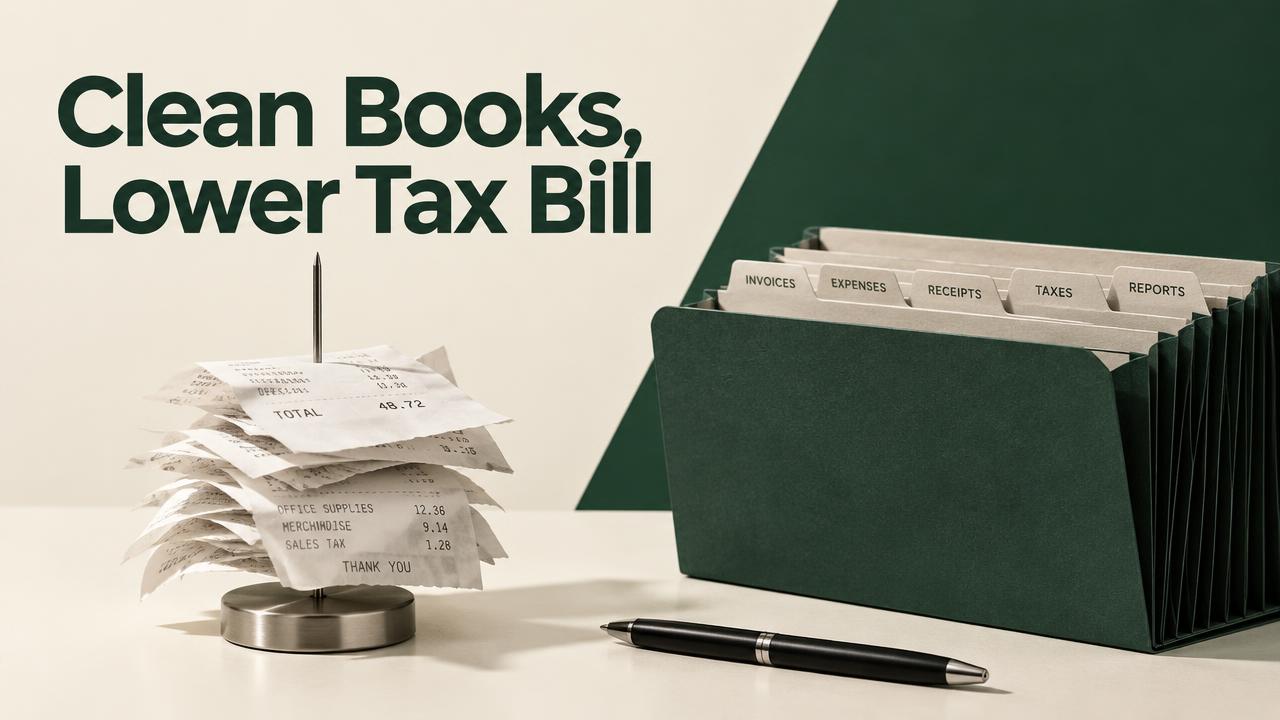
The single biggest way to lower your tax preparation bill is to maintain clean, organized books all year. When a tax preparer gets a shoebox of unsorted receipts and statements, a significant part of their fee covers the basic accounting work needed just to get started. Clean records mean a faster, more efficient, and less expensive tax filing.
Key Takeaways
- Your tax preparer’s job is tax strategy and compliance, not basic data entry. You pay a premium for them to do it.
- Separating business and personal accounts is the non-negotiable first step.
- Using dedicated bookkeeping software is more efficient and less error-prone than spreadsheets.
- Reconciling accounts monthly turns a year-end nightmare into a minor monthly task.
- Clean books don't just save money on prep; they provide a clear view of your business's financial health.
Why a Mess Costs You Real Money
Let's be blunt. When you hand us a year's worth of unsorted bank statements, credit card bills, and a Ziploc bag of receipts, you aren't paying for tax preparation. You're paying for cleanup. A tax professional's time is valuable, and if we spend the first five hours just figuring out your income and categorizing your expenses, that time goes on your bill. You're paying a specialist's rate for a data entry clerk's job. The goal is to hand your preparer a clean Profit & Loss statement and a Balance Sheet, not a puzzle.
Habit 1: Separate Business and Personal Finances. No Excuses.
This is the foundation. If you do nothing else, do this. Open a dedicated business checking account and get a separate business credit card. Run ALL your business income and expenses through these accounts. Only these accounts. Paying for a business lunch with a personal card or buying groceries with the business debit card creates a tangled mess that someone has to unravel. Commingling funds is the fastest way to inflate your tax prep bill and attract unwanted IRS scrutiny.
Habit 2: Use Actual Bookkeeping Software
A spreadsheet is not bookkeeping software. It's a grid. For any business beyond a tiny side hustle, you need a real system. Software like QuickBooks, Xero, or Wave is designed to connect to your bank accounts, automate transaction importing, and generate the financial reports your tax preparer needs. It provides a clear audit trail and dramatically reduces the chance of manual errors that can haunt you later. The monthly subscription fee is almost certainly less than what you'd pay in extra prep fees for a messy spreadsheet.
Habit 3: Reconcile Your Accounts Monthly
Reconciliation sounds intimidating, but it's simple: it's the process of making sure the transactions in your bookkeeping software match your bank and credit card statements. Doing this once a month takes an hour or less. It allows you to catch errors, identify missing transactions, and categorize everything while it's still fresh in your mind. Waiting until January to reconcile 12 months of statements is a recipe for a multi-day headache, mistakes, and missed deductions.
Habit 4: Digitize and Categorize Receipts as You Go
Faded thermal paper receipts are an auditor's nightmare and a preparer's headache. Get into the habit of capturing receipts immediately. Use your bookkeeping software’s mobile app or a dedicated tool to snap a picture of the receipt right after a purchase. You can add a note about what it was for and categorize it on the spot. This takes 15 seconds. Trying to remember what a $74 purchase at Staples in March was for ten months later takes a lot longer.
Habit 5: Keep a Running Log of Major Asset Purchases
Did you buy a new work truck, expensive computer equipment, or office furniture? Your tax preparer needs to know the purchase date, the exact cost (including shipping and setup), and how it was used to calculate depreciation correctly. Don't make us hunt for this information. Keep a simple log or folder with the invoices for all major asset purchases. It saves a ton of back-and-forth and ensures your depreciation deductions are calculated properly from the start.
Frequently Asked Questions
Q: Can't my tax preparer just do my bookkeeping for me? A: Yes, and we can also change the oil in your car, but it's not the best use of our skills or your money. Tax professionals are specialists in tax law and strategy. While we are perfectly capable of doing bookkeeping, it's more cost-effective for you to either do it yourself with the right tools or hire a dedicated bookkeeper whose rates are designed for that task.
Q: What records do I actually need to give my tax preparer if my books are clean? A: The dream package is a year-end Profit & Loss (P&L) statement, a Balance Sheet, and maybe a General Ledger report. These are standard reports generated in one click by any real bookkeeping software. This allows us to get right to work analyzing your numbers for tax planning opportunities, not just adding them up.
Q: Is a spreadsheet ever good enough? A: If you have a single client, receive three payments a year, and have almost no expenses, maybe. But the moment you have multiple income sources, inventory, employees, or significant, regular expenses, a spreadsheet becomes a liability. It's prone to formula errors, difficult to audit, and doesn't produce the standard reports we need.
Ready to Make Tax Season Easier?
Good bookkeeping is about more than just a lower tax prep bill; it’s about having a clear, real-time understanding of your business's health. But saving money is a pretty good motivator. If your books are a mess and you don't know where to start, or if they're clean and you're ready for a tax team that appreciates it, we're here to help. Call us at 718-356-5178 to book an appointment and see how a proactive approach can make all the difference.
Keep reading
Questions about your own situation? Book an appointment with the My Tax Fella team.